Leather has no tolerance for approximation. A leather jacket, soaked in sweat, can turn a beloved garment into a source of embarrassment. Classic tricks like washing machines and miracle sprays should be avoided: they risk damaging the leather or masking the problem without ever solving it.
Some textile cleaners claim to be universal, but when used on leather, they often prove disappointing, even destructive. Only targeted methods designed to preserve the material offer a lasting and respectful solution for your favorite jacket.
Why do leather jackets retain sweat odor?
A leather jacket is an investment, a stylistic choice, but also a real odor trap. Leather, alive and dense, absorbs everything: moisture, sweat, volatile compounds. With every rise in temperature, it retains more than one might think, keeping a memory of every bodily scent.
The lining is no exception. If it cannot be removed, ventilation becomes complicated, and sweat has plenty of opportunity to settle into its fibers. The result? Bacteria thrive, odors set in, sometimes accompanied by mold or musty smells. A detachable lining, on the other hand, simplifies cleaning and limits these inconveniences. The combination of leather and fabric then creates an ecosystem where odors can quickly become overwhelming.
Do not underestimate the impact of storage: a closed space, lack of ventilation, a still damp jacket, and the odor becomes entrenched. These often overlooked elements accelerate the proliferation of unwanted odors. On the website www.reves-de-deco.fr, these phenomena and suitable solutions are detailed precisely, without risk to the leather.
Knowing how leather reacts to moisture and time gives you the means to act without a false note, to preserve the look and freshness of the jacket, season after season.
What effective methods can neutralize bad odors without damaging leather?
To rid a leather jacket of sweat odors, there’s no need to multiply risky experiments. Leather does not tolerate excess water or overly strong products well. Here are the gentle and effective approaches that have proven themselves, without compromising the material:
- Baking soda: generously sprinkle the lining, let it sit overnight, then remove the powder with a vacuum cleaner fitted with a soft nozzle. This simple gesture neutralizes odors without ever attacking the leather fibers.
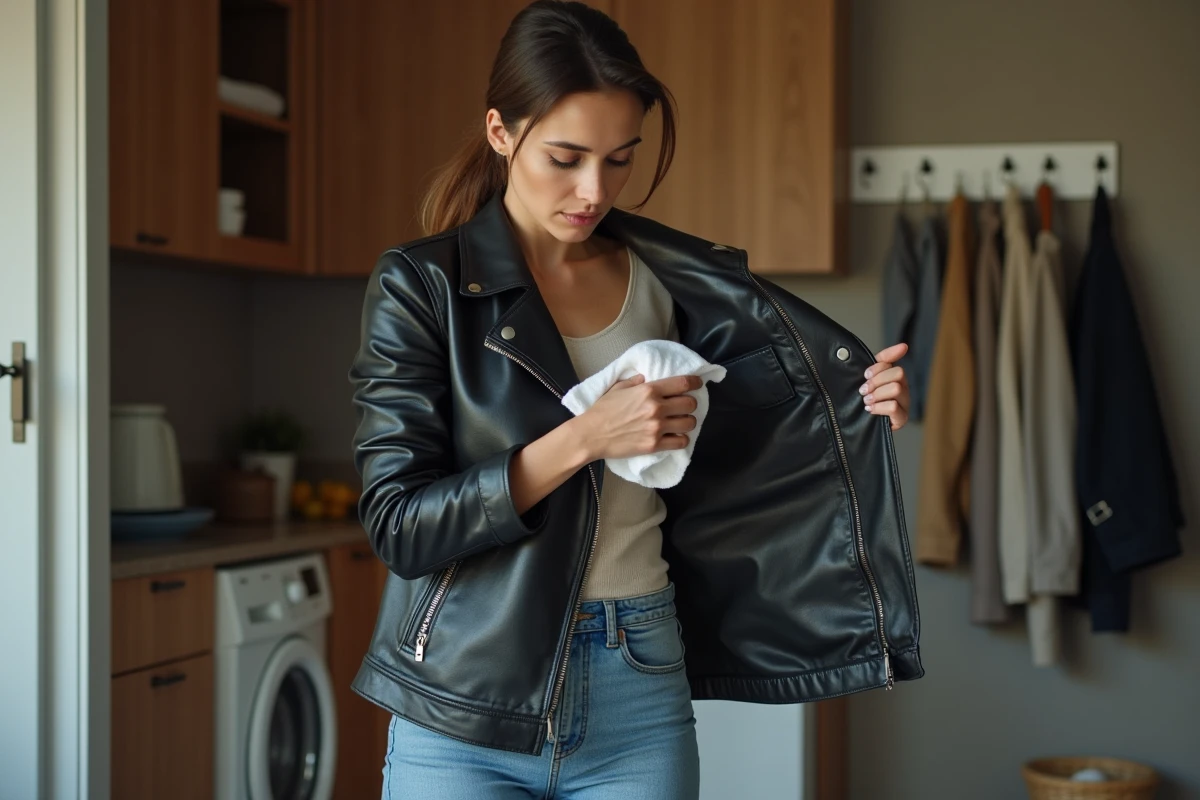
- Diluted white vinegar: mix water and white vinegar, soak a soft cloth, dab the inside of the jacket, then air it out on a wide hanger. Vinegar chases away bad odors but should never soak the leather directly.
- Newspaper: insert crumpled paper into the sleeves and body of the jacket. This old trick absorbs moisture and residual odors effortlessly.
- Talc or baking powder: applied to the lining, they gently capture persistent odors.
- Activated charcoal: enclose the jacket with a few pieces of activated charcoal in an airtight bag, and let it sit for several hours to eliminate smoke or frying odors.
After each treatment, hang the jacket on a wide hanger in a well-ventilated space. Airing remains the best ally against stubborn odors. Absolutely avoid pure water, detergents, or traditional laundry detergents: they stiffen and irreparably damage the leather. Before applying any of these methods, always test on a hidden part of the garment to rule out any risk of discoloration or alteration.
Recommended products and tips for maintaining your leather jacket sustainably
Careful maintenance is essential to keep a leather jacket impeccable, wash after wash, year after year. Relying on products suitable for leather prolongs the garment’s shine and flexibility.
For regular cleaning, turn to a polishing cleaning milk or a special smooth leather milk. Apply it with a clean cotton cloth in circular motions, then let it dry away from any direct heat. This routine prevents drying and cracking.
To nourish and protect the leather, alternate between balm, specific grease, beeswax, or conditioner. These treatments enhance natural waterproofing and protect the jacket from moisture. Tired or dried-out leather will regain flexibility and shine with a few drops of neatsfoot oil, to be used occasionally.
Forget aggressive products, alcohol, or perfume that deteriorate the leather deeply. If you wish to lightly scent your jacket, consider a few drops of lavender or tea tree essential oil, diluted and applied only to the lining.
A waterproofing agent, applied regularly, protects the jacket from stains and water. For small superficial stains, diluted Marseille soap remains a reliable option, provided it is used sparingly. The key: follow the instructions of each product, avoid excess, and prioritize gentleness to ensure the beauty of the leather over the long term.
A well-maintained leather piece lasts for years without weakening. It goes without saying that every gesture counts, from cleaning to airing. The result: a jacket that retains its flair, withstands the seasons, and fears neither sweat nor stubborn odors.