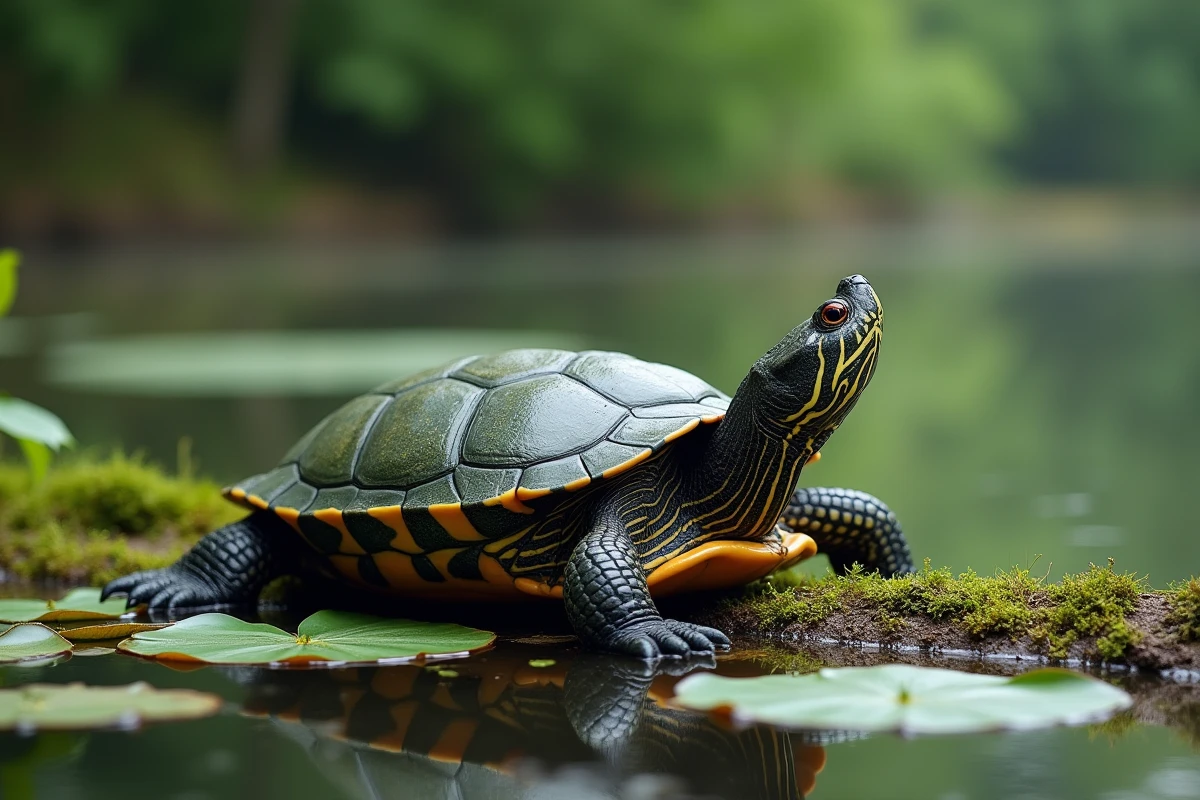
Turtles breathe with lungs, like all reptiles. This statement seems simple, but it masks a much more complex anatomical reality than in most terrestrial vertebrates. Their shell, a rigid and protective structure, prevents any classic thoracic expansion. The respiratory system of turtles has therefore evolved along unique mechanical and physiological pathways, differing depending on whether the animal lives on land, in freshwater, or in the open sea.
Respiration of terrestrial turtles: ventilating without a mobile rib cage
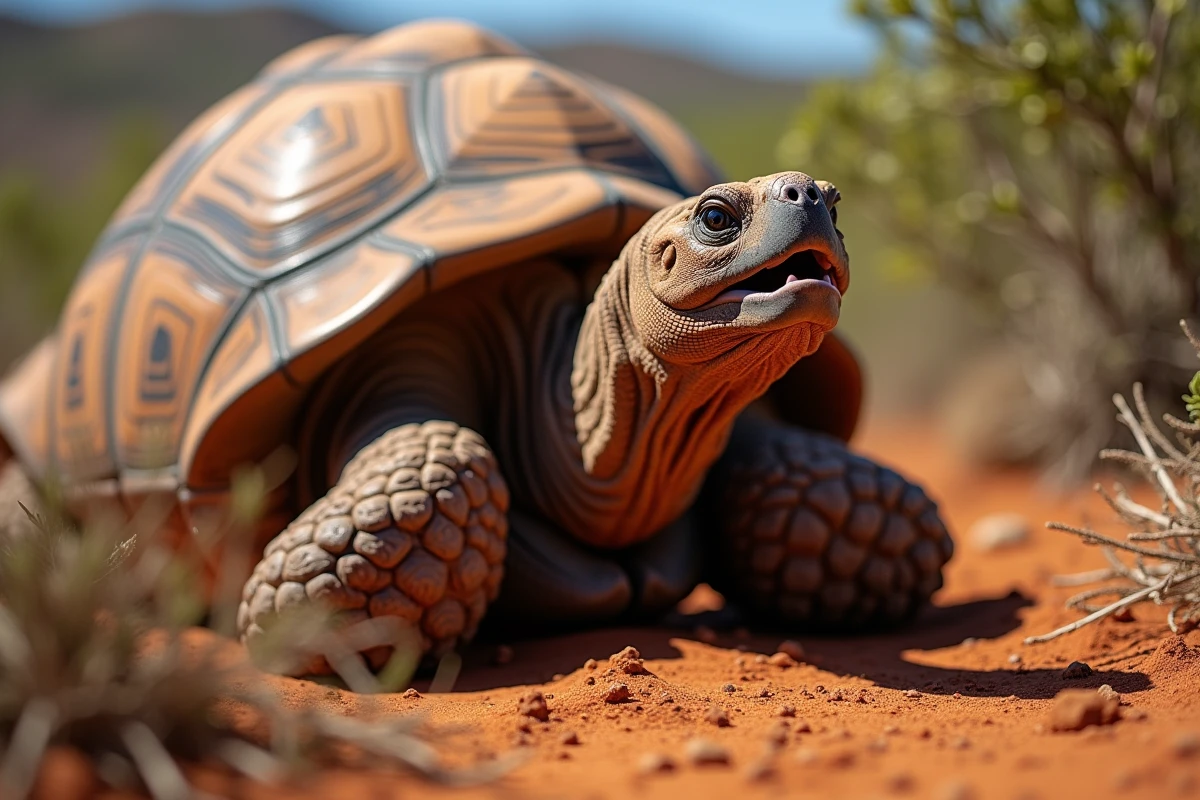
In mammals, inhaling involves expanding the rib cage through the diaphragm and intercostal muscles. Terrestrial turtles have none of these options. Their shell forms a bony envelope fused to the vertebrae and ribs, making any trunk expansion impossible.
To compensate for this mechanical constraint, these reptiles rely on internal muscle groups located at the base of the limbs and around the viscera. The retraction and extension movement of the front legs plays a direct role in ventilation: when the legs retract, they compress the internal space and expel air. When they extend, the lung volume increases and air enters.
The movements of the abdominal organs also contribute to this process. The liver and stomach, moving under the influence of gravity or muscle contraction, alter the internal pressure of the body cavity. This visceral pump mechanism is well documented in veterinary physiology journals published in recent years.
If you want to learn everything about turtle respiration, this bodily mechanics is the starting point to understand: without it, the animal simply could not ventilate its lungs.
Aquatic turtles and cloacal respiration: a supplement, not a replacement
Some species of freshwater turtles have the ability to absorb dissolved oxygen from the water through the cloaca, this common posterior opening for the digestive, urinary, and reproductive tracts. The phenomenon, often summarized by the phrase “breathing through the backside,” is real but deserves clarification.
Cloacal respiration remains a supplement to pulmonary respiration, not a substitute. Available data show that this mechanism is primarily documented in a few species adapted to aquatic environments, such as certain Australian turtles of the genera Elusor or Rheodytes. These animals have richly vascularized cloacal sacs that allow for gas exchange with the surrounding water.
This mode of respiration becomes particularly important during hibernation. When the turtle remains submerged under ice for several months, its metabolism drops significantly. Its oxygen needs decrease to the point where cloacal absorption, combined with cutaneous diffusion, is sufficient to maintain minimal vital functions.
Cutaneous absorption in freshwater turtles
Beyond the cloaca, the skin itself participates in gas exchange in certain aquatic species. Areas of thin skin, particularly around the neck and limbs, allow a limited amount of oxygen to pass through. This phenomenon is not unique to turtles (it is also found in amphibians), but it contributes to their ability to remain submerged much longer than their lungs alone would allow.
Marine turtles: apnea diving and controlled bradycardia
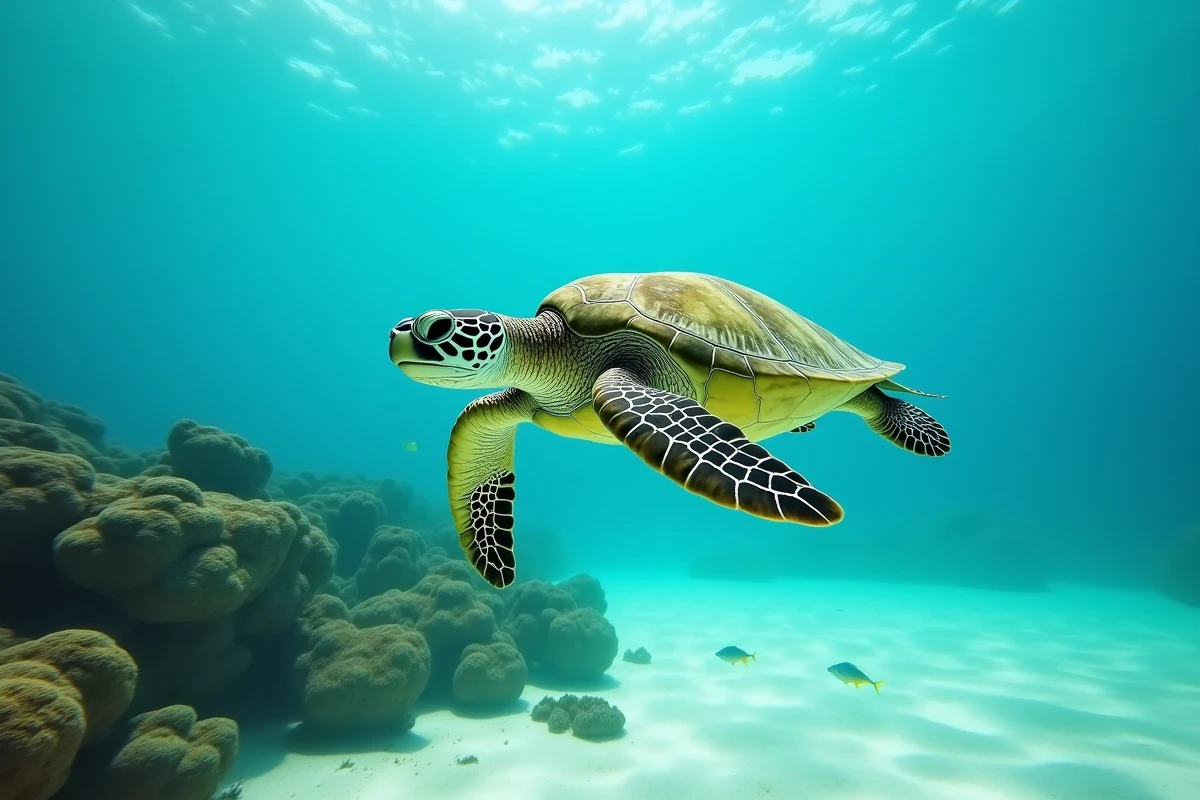
Marine turtles are strictly pulmonary breathers. They must surface to inhale. Their uniqueness lies in the remarkable efficiency of each respiratory cycle and in the physiological adaptations that prolong their dives.
- Their lungs ventilate very quickly: a marine turtle can renew almost all the air in its lungs in one to two seconds, a renewal rate far superior to that of mammals.
- During diving, the heart rate voluntarily slows down (diving bradycardia), which reduces oxygen consumption by the tissues and prolongs immersion time.
- The structure of the shell and lungs offers some flexibility that helps manage pressure variations at depth, limiting the risks of barotrauma.
At rest, a marine turtle can stay underwater for several hours. When active (feeding, moving, fleeing), surface ascents are much more frequent. This physiological flexibility is at the heart of their ability to travel thousands of kilometers during their migrations.
Turtle lungs: an architecture different from that of mammals
The lungs of turtles do not resemble those of mammals. They are proportionally large, positioned against the dorsal side of the shell, and their internal structure consists of multiple chambers rather than fine alveoli like in humans.
This architecture, coupled with the absence of a functional diaphragm, imposes a ventilation mode entirely dependent on skeletal muscles. In terrestrial species, it is the movement of the limbs. In aquatic species, the hydrostatic pressure of the water also contributes to the respiratory mechanics when the animal submerges or emerges.
A often overlooked point: the position of the body directly influences respiratory efficiency. A turtle flipped onto its back sees its organs compress its lungs under the influence of gravity, which can compromise its ventilation in a few hours. This anatomical detail explains why a flipped turtle risks asphyxiation if it cannot right itself.
Reptiles without gills
Despite their aquatic life, turtles do not possess gills. They thus differ from fish and amphibian larvae. Their dependence on atmospheric air makes them vulnerable to fishing nets, surface pollution, and any obstacle that prevents access to the surface.
The respiratory system of turtles illustrates an evolutionary adaptation over more than a hundred million years, where each lineage (terrestrial, freshwater, marine) has developed its own solutions to a common constraint: ventilating lungs enclosed in a rigid box. The diversity of these responses, from the visceral pump to diving bradycardia to cloacal absorption, remains an active field of study in comparative physiology.