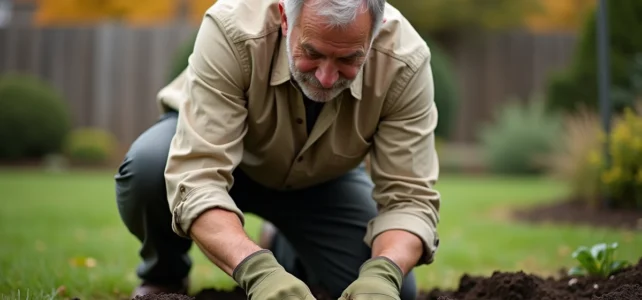
Between spring sowings that wither due to lack of watering and summer attempts doomed to failure, choosing the right time to sow your lawn depends less on the calendar than on measurable parameters. Soil temperature, municipal water restrictions, type of seeds: these variables determine the germination rate far more than the month indicated on the seed packet.
Soil Temperature and Germination: The Key Thresholds
Recent professional guides place soil temperature at the center of the sowing decision. As long as the soil has not reached a minimum of 12 °C, the seeds remain dormant. Below this threshold, they risk rotting if late frosts occur.
The optimum germination temperature for cool-season grasses (ryegrass, fescues) is between 15 and 24 °C soil temperature. It is not the air temperature that matters, but rather the temperature measured a few centimeters below the surface. A soil thermometer, available for a few euros at garden centers, avoids approximations.
In practice, this range corresponds to two windows during the year. Understanding the ideal date to sow the lawn involves cross-referencing this thermal parameter with local rainfall and current prefectural orders.
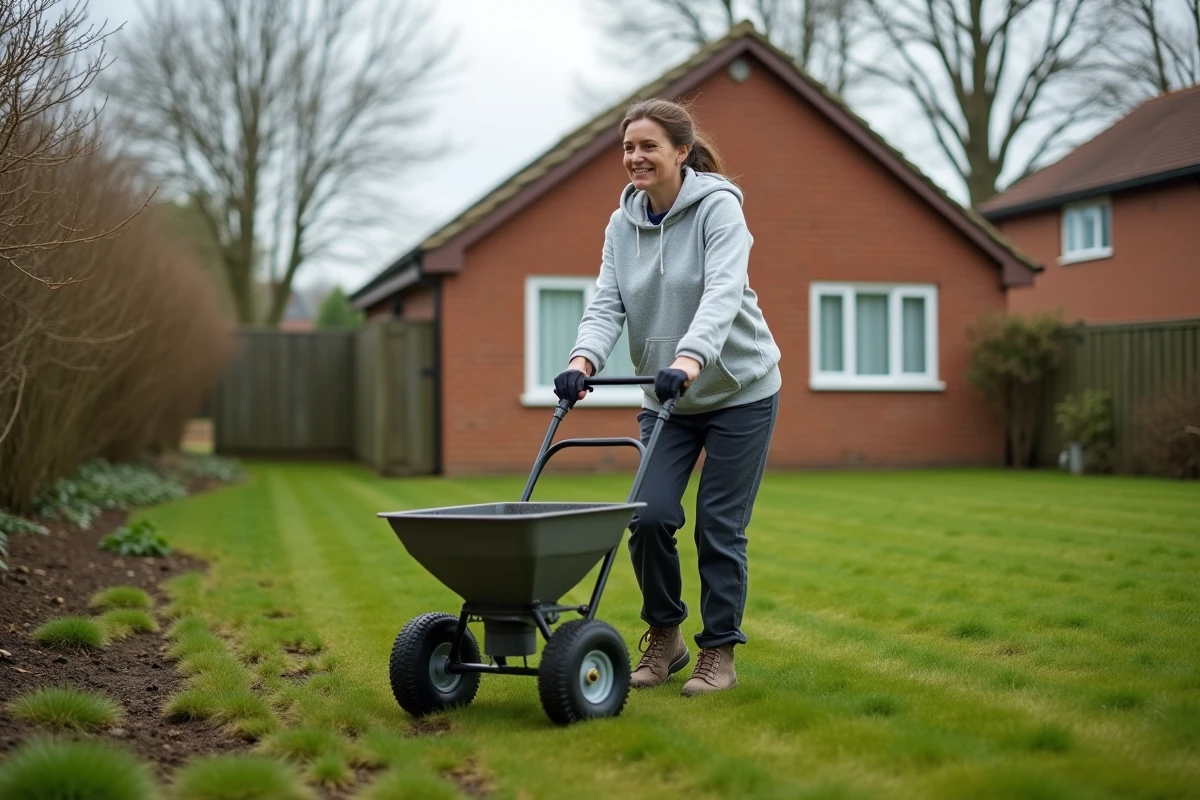
Spring or Autumn Sowing: Comparative Table
Two periods consistently appear in recommendations. Their characteristics differ across several concrete criteria.
| Criterion | Spring (mid-March – mid-May) | Autumn (late August – late September) |
|---|---|---|
| Soil Temperature | Reaches 12 °C late depending on the regions | Still within the 15-24 °C range |
| Weed Pressure | High (simultaneous germination of weeds) | Low (vegetative cycle of weeds declining) |
| Risk of Watering Restrictions | High from June in case of drought | Low (end of the critical summer period) |
| Rooting Before Stress | The grass faces summer heat while young | The grass roots throughout the winter before the following summer |
| Visible Result | Usable lawn by summer | Dense lawn by the following spring |
The reading of this table highlights a clear imbalance. Spring offers a quick result but exposes sowing to greater risks. Autumn combines favorable conditions for germination and rooting.
Watering Restrictions: The Parameter Not Shown by the Calendar
Since 2022-2023, several French departments placed on drought vigilance or alert explicitly recommend avoiding lawn sowing in early spring and summer. The reason is simple: first-year watering is frequently restricted or even prohibited by prefectural order during the hot months.
A lawn sowing requires soil to be kept moist on the surface throughout the germination phase, which lasts one to three weeks depending on the species. Without regular watering, the seedlings die within a few days.
The green space services and some water agencies recommend the window late August – late September as a reference period. This shift towards late summer is not based solely on agronomic reasons. It also aims to ensure compliance with drought orders and to limit sowing failures due to lack of water.
Check Local Orders Before Sowing
Before purchasing seeds, check your prefecture’s website or the Propluvia platform to know the current level of restrictions in your municipality. A sowing started in April in a department that will go on heightened alert in June is a lost investment.
Soil Preparation: What Determines Sowing Success
The sowing date loses all its significance if the ground is not ready. A few steps directly determine the seed emergence rate.
- Weed the plot at least two to three weeks before sowing to eliminate competing vegetation without leaving active chemical residues in the soil
- Level and refine the soil surface over a few centimeters to obtain a uniform seedbed where the seeds remain in direct contact with the moist substrate
- Slightly compact the soil with a roller after sowing to press the seeds against the ground, which accelerates water absorption by the seed
- Maintain a constant surface moisture without waterlogging the soil, watering with fine spray morning and evening during the germination phase
Poorly prepared soil results in uneven emergence, bare patches, and rapid invasion by weeds. The quality of soil preparation is as important as the choice of timing.
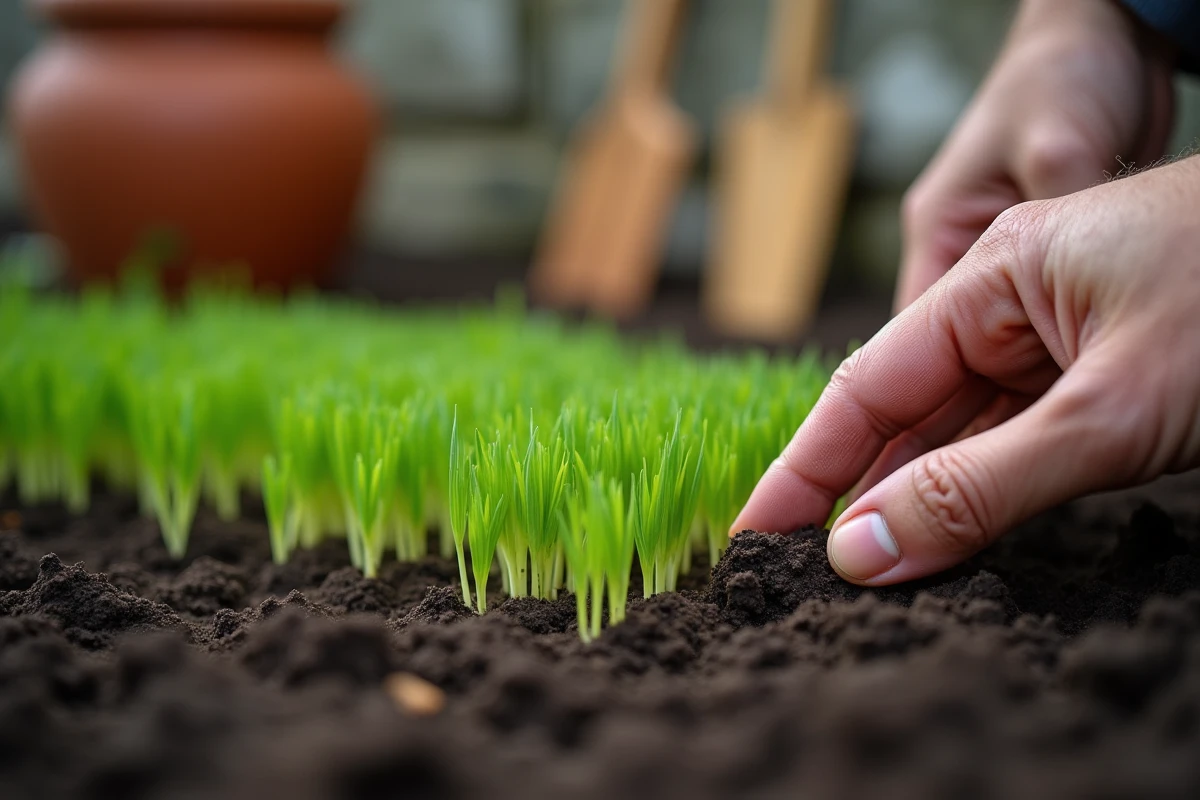
Seed Selection Based on Region and Land Use
Not all grass seeds react the same way to local climatic conditions. Fescue-based mixtures tolerate drought better than English ryegrass, but the latter germinates faster and offers quick visual results.
For a regularly trampled garden, a sports or leisure mix containing ryegrass and creeping red fescue withstands wear better. For a dry area exposed to full sun, tall fescues dominate the mixtures suited to these conditions.
The seeding rate indicated on the packaging varies by species. Adhering to the manufacturer’s recommended dose ensures a uniform density without excessive competition among seedlings.
Late Sowing in June: A Risky Bet
Some gardeners attempt sowing in June to make up for a missed spring. Germination may work if temperatures do not exceed critical thresholds and if watering remains possible. However, the risk of watering prohibition and the pressure from summer weeds make this option significantly less reliable than the autumn window.
The decisive factor in the debate remains soil temperature coupled with water availability. A sowing done late August with soil at 15-20 °C and no watering restrictions meets the best measurable conditions for achieving a dense and resilient lawn by the following spring.