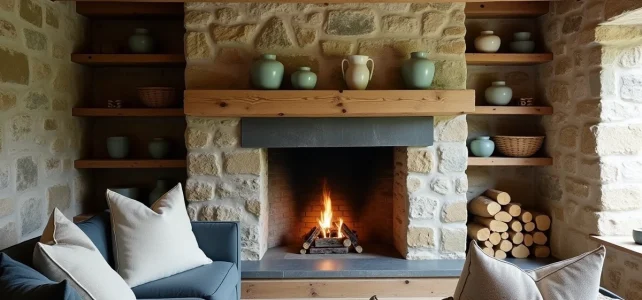
Breton decoration has largely moved beyond the realm of beach stripes and ceramic hydrangeas. Interior design projects in Brittany are now built around technical constraints specific to the region, and these constraints guide every choice of material, furniture, and color much more than a simple marine mood board would.
Hygrometry and ventilation: the technical foundation of a sustainable Breton interior
Any reflection on the decoration of a house in Brittany begins with moisture management. The indoor humidity level in coastal or semi-coastal constructions remains high for a large part of the year. Without prior treatment of ventilation, decorative choices deteriorate within a few seasons.
Wall coverings made from lime or breathable coatings naturally regulate moisture exchanges. We recommend prioritizing these finishes before considering decorative paint, especially in north-facing living rooms or those exposed to prevailing winds.
The choice of textiles follows the same logic. Raw linen or washed cotton withstands humidity variations better than synthetic velvet. This approach, which may seem limiting, actually opens up a range of natural materials perfectly aligned with current trends in interior decoration.
Those who wish to learn everything about Jeune Bretagne maison will find additional resources on housing and the living environment specific to the region.
Raw materials and neutral tones: Breton decor moves away from maritime themes
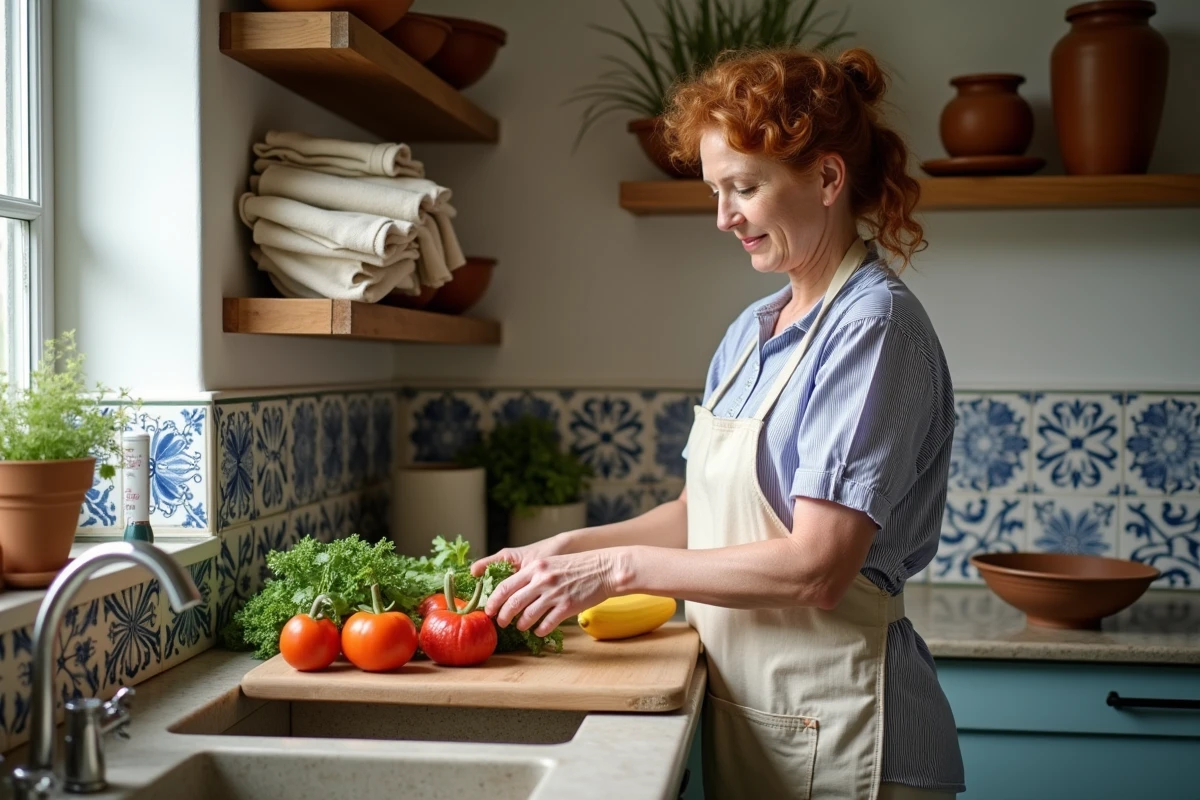
Recent editorial content on housing in Brittany confirms a clear shift. Breton interiors now favor sand, linen, and light wood tones rather than the blue-and-white duo long associated with the Atlantic coast. This shift is not just aesthetic: it reflects a search for coherence between the mineral character of the building and the interior space.
Exposed granite, omnipresent in local houses, imposes a design choice. Rather than hiding it, the most successful projects integrate it as a compositional element. A wall of raw granite at the back of the living room, paired with light oak furniture and patinated brass lighting, creates a contrast of materials that gives character to the room without any thematic accessories.
Color palette suited to Breton buildings
The shades that work best in these interiors are those that interact with the changing light of the Atlantic coast. Soft off-whites with a hint of pink, warm grays, and very desaturated moss greens. Saturated colors (Klein blue, Basque red) work as accents on furniture or wall art, not as flat colors.
- Walls and ceilings: lime plaster tinted in the mass, off-white or stone gray, to absorb the low light without creating cold reflections
- Interior woodwork: raw wood oiled or painted in muted shades (lichen green, very pale slate blue) to mark openings without visual disruption
- Textiles and seating: crumpled linen, boucle wool, thick cotton in natural tones, which age well in humid environments
Energy renovation and interior decoration: concrete trade-offs
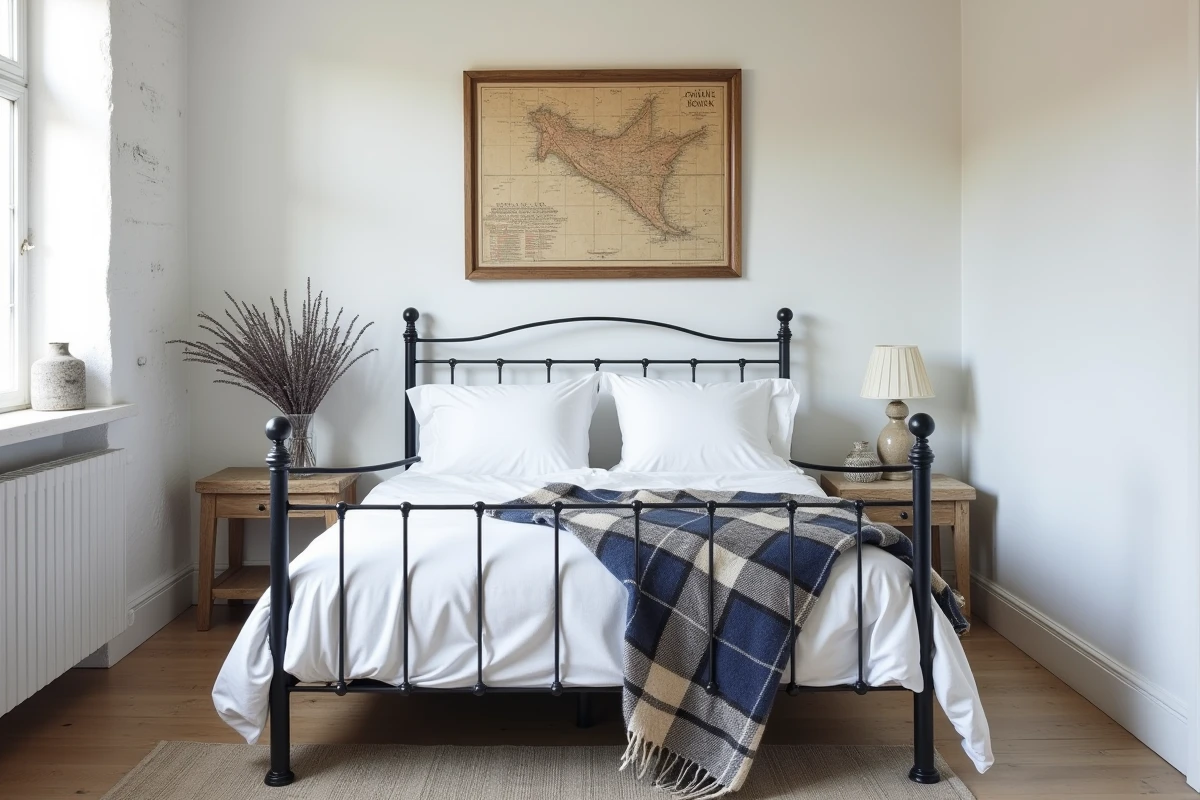
In Brittany, thermal performance directly conditions decorative options. Interior insulation, common in older houses with protected stone facades, reduces the living space. Every centimeter counts, and this alters furniture choices.
A living room that loses ten centimeters on two walls after insulation can no longer accommodate an oversized corner sofa. We observe that the most successful projects incorporate custom furniture or compact design pieces, designed for constrained spaces.
Floor coverings and insulation: do not choose one without the other
The treatment of the floor is a technical point often underestimated. In a longhouse or a village house, the terracotta or stone floor must be insulated from below if the crawl space allows, or treated with a floating technical floor. The choice of visible covering (antique tiles, solid wood flooring, polished concrete) depends on the chosen insulation solution.
A solid wood floor laid on a low-temperature underfloor heating system works well in local oak or chestnut, provided that the thickness and width of the planks are compatible with heat diffusion. Planks that are too thick or too wide tend to warp.
Character furniture and local creativity in Brittany
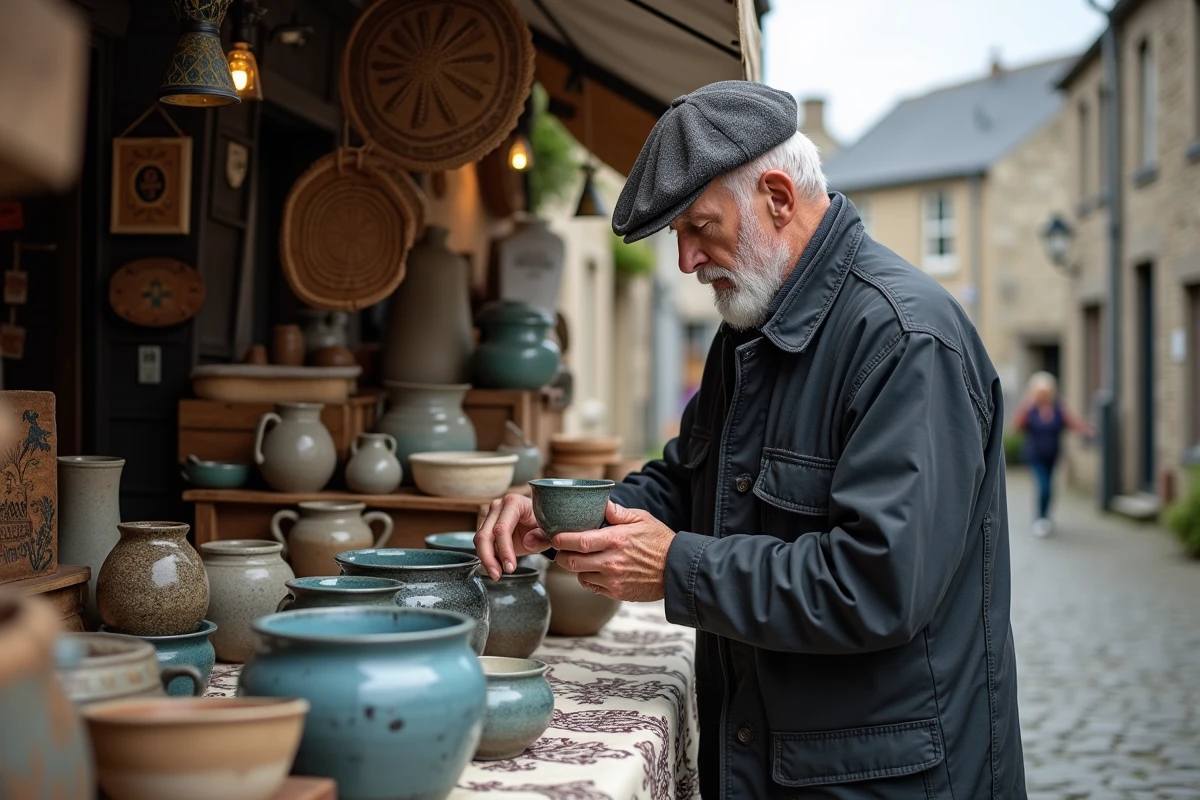
Brittany has a network of artisans and designers whose production naturally fits into these sober interiors. Ceramists, cabinetmakers, blacksmiths: locally produced furniture and objects often share an aesthetic of raw materials that avoids the pitfalls of regionalist pastiche.
Integrating a handcrafted piece into a decor project is not a whim. A unique object anchors the space in a territory without resorting to thematic decoration. A solid oak table signed by a cabinetmaker from Trégor, a stoneware lamp turned in the Fougères area: these choices give character to the living room while supporting a regional creativity ecosystem.
- Handcrafted ceramics: bowls, vases, and lamps in stoneware or earthenware, with matte finishes and mineral colors
- Wood furniture: tables, consoles, and shelves in local species (oak, chestnut, ash), often offered in oiled finishes
- Art textiles: cushions and throws in woven linen, sometimes dyed with natural pigments from Breton dye plants
The decoration of a house in Brittany benefits from being thought of as a global project, where technique and aesthetics nourish each other. Local materials, moisture management, thermal constraints: these parameters, far from limiting creativity, provide a framework that produces coherent and sustainable interiors.