The MC77 method is based on laser stimulation of auricular points coded according to a proprietary protocol. It differs from generic laser approaches by a precise mapping of the reflex zones of the ear, combined with calibrated wavelength and power parameters for each addictive profile. Understanding its technical foundations allows us to situate what this method actually offers and what it does not claim to replace.
Laser Parameters and Auricular Mapping of the MC77 Method
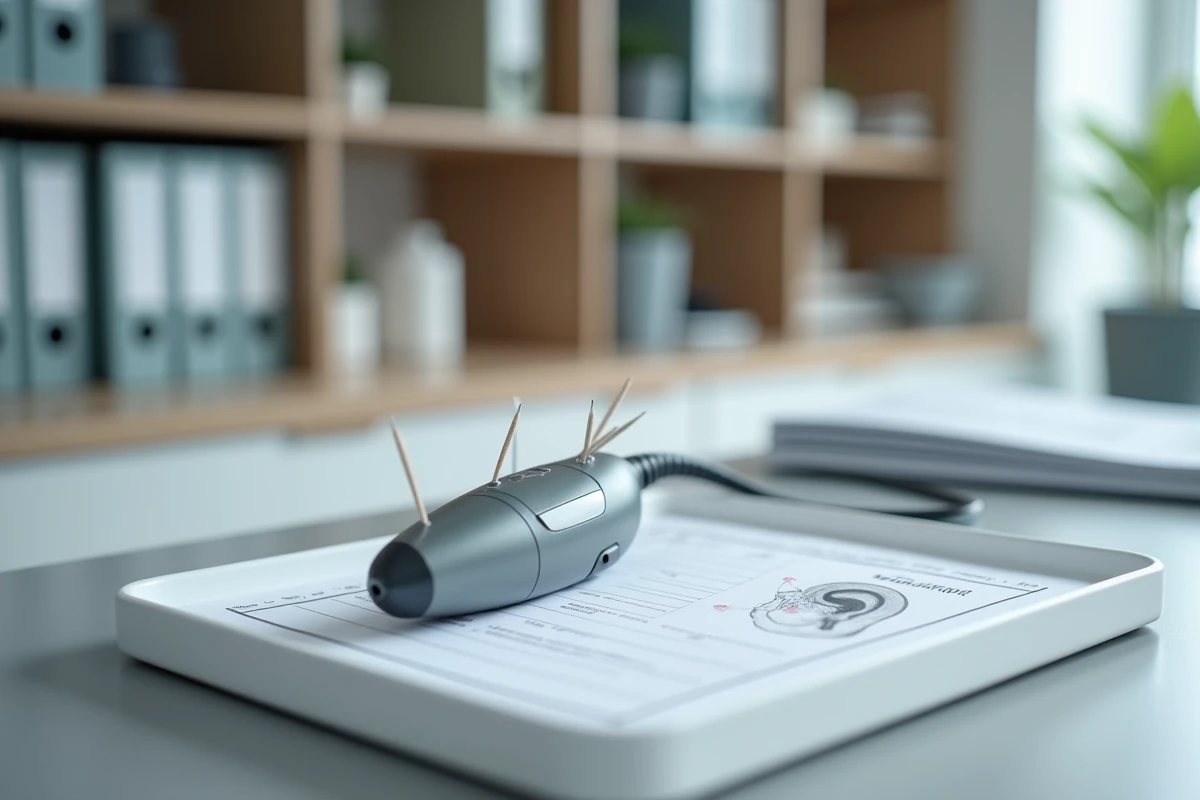
The MC77 protocol uses a low-intensity laser applied to specific points on the auricle. These points correspond to a mapping derived from auriculotherapy but adapted and sequenced according to a proprietary order. The stimulation aims to provoke a release of endorphins to alleviate the symptoms of nicotine withdrawal.
We observe that the difference from a simple auricular laser lies in the sequencing: the MC77 method does not limit itself to targeting a single point (the classic “tobacco point” of Nogier’s auriculotherapy). It integrates several complementary points, particularly those related to stress management and appetite regulation, two recurring factors in relapse.
The power of the laser remains within the category of non-invasive devices, with no risk of skin burns. The practitioner trained in the MC77 method learns to adjust the exposure time per point based on the patient’s reactivity, which requires practical training and not just theoretical knowledge. For professionals wishing to train, smoking cessation through laser according to the MC77 method constitutes a structured course around these stimulation protocols.
The equipment used in MC77 practices is a diode laser, distinct from the high-power lasers used in dermatology or surgery. The wavelength is in the near-infrared spectrum, an area known for its ability to penetrate superficial tissue without significant thermal effect.

Smoking Cessation by Laser: Positioning Against Validated Treatments
The French recommendations from the Haute Autorité de Santé (HAS), in their 2014 report titled “Stopping Tobacco Consumption,” do not mention any specific laser protocol as a first-line treatment. Validated treatments remain nicotine substitutes, behavioral therapies, and certain pharmacotherapies (varenicline, bupropion).
This lack of official recognition does not imply absolute ineffectiveness, but it necessitates caution in communication. Randomized studies comparing active laser and sham laser (placebo) have not demonstrated significant results according to the synthesis by Peiffer, Underner, and Perriot published in Le Courrier des addictions. The level of evidence is rated as low by these authors.
We recommend situating the MC77 method within the realm of complementary approaches. A trained practitioner must inform their patients that this technique does not replace medical support, especially for smokers with high dependence or presenting psychiatric comorbidities.
What the MC77 Practitioner Can Legally Announce
No state certification or RNCP title specifically covers the practice of smoking cessation by laser in France. Legal and ethical responsibility lies with the practitioner. Announcing a success rate not supported by published data exposes one to the risk of litigation for misleading commercial practices.
The current regulatory framework classifies anti-addiction laser training in the category of non-regulated “well-being” training. This reality does not invalidate the practice, but it requires particular rigor in presenting results to patients.
MC77 Protocols and Post-Cessation Craving Management
Craving, this irrepressible urge to smoke that occurs in the days and weeks following cessation, represents the main factor in relapse. The MC77 method structures its protocols into two distinct phases.
- The initial session targets the auricular points related to nicotine dependence itself, aiming to reduce the sensation of physical withdrawal from the very first hours.
- The consolidation sessions, spaced over several weeks, target points associated with stress management, anxiety, and food cravings, three major triggers for relapse.
- A complementary protocol specific to weight loss may be offered in parallel, as weight gain is a recurring concern for patients undergoing smoking cessation.
This two-step approach distinguishes MC77 from “one-shot” laser sessions offered by some centers. Post-cessation follow-up is an integral part of the protocol and assumes that the practitioner is skilled in reading relapse signals.
Anti-Tobacco Laser Training: Required Technical Skills
Training in the MC77 method is not limited to learning the location of auricular points. The curriculum includes understanding the neurobiological mechanisms of nicotine dependence, mastering the laser equipment, and learning to conduct motivational interviewing tailored to cessation.
- Knowledge of relative contraindications (pregnancy, epilepsy, photosensitizing treatments) and the ability to refer to a physician if necessary.
- Mastery of adjusting laser parameters based on skin phototype and individual patient sensitivity.
- Ability to construct an individualized cessation pathway, combining laser sessions and behavioral recommendations.
- Understanding the limitations of the method to avoid any unfounded therapeutic promises.
The certificate issued at the end of the training has no state value, making the quality of the practical training received all the more necessary. A competent practitioner is distinguished by their ability to support the patient over time, not just during the initial session.
Hypnosis, Dietary Supplements, and Laser: Possible Combinations
Some practitioners trained in MC77 combine auricular laser with other complementary approaches. Hypnosis, in particular, is frequently combined to work on behavioral anchors that the laser alone does not modify. Herbal adaptogenic dietary supplements are sometimes recommended to support the cessation phase, although their effectiveness remains debated.
The MC77 method does not prohibit these associations. It frames them by specifying that the laser protocol must remain the foundation of care, with other techniques serving as complements and not substitutes. This clarity of positioning avoids therapeutic dispersion that undermines the readability of the patient journey.
Smoking cessation by laser according to the MC77 method occupies a specific place in the offering of unconventional care. Its interest lies in the structuring of its protocols and in the technical training it requires from its practitioners. Transparency regarding the current scientific limits remains the best guarantee of credibility for professionals who choose this path.