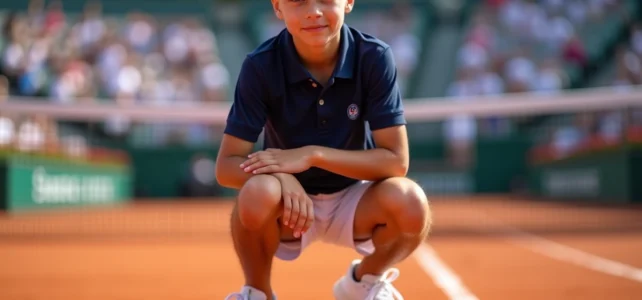
Every year, the Roland-Garros tournament mobilizes several hundred young people to ensure the smooth running of matches on the clay courts. These ball retrievers, nicknamed “ballos,” are visible at every point, at every change of side. The question of their remuneration consistently arises in searches related to the Parisian tournament, and the answer is less straightforward than it seems.
Legal Status of Ball Retrievers: Volunteers, Not Employees
The ball retrievers at Roland-Garros are not employees of the French Tennis Federation. Their official status is that of young volunteers governed by an agreement, which distinguishes them from a traditional employment contract. They do not receive a salary in the sense of the Labor Code.
In practice, the FFT provides them with a range of benefits in kind: complete uniforms (retained at the end of the tournament), meals on-site, and coverage of transportation costs. A reimbursement is paid, but its exact amount is subject to little official communication from the organizers.
This model is based on the idea that participation in the tournament constitutes a formative and prestigious experience rather than a job. The available data does not allow for a precise comparison of this reimbursement to a standard hourly wage, and the FFT remains discreet on the subject. An article detailing the remuneration of ball retrievers at Roland Garros helps to better understand the amounts mentioned by various sources.
Selection and Training of Ballos at Roland-Garros
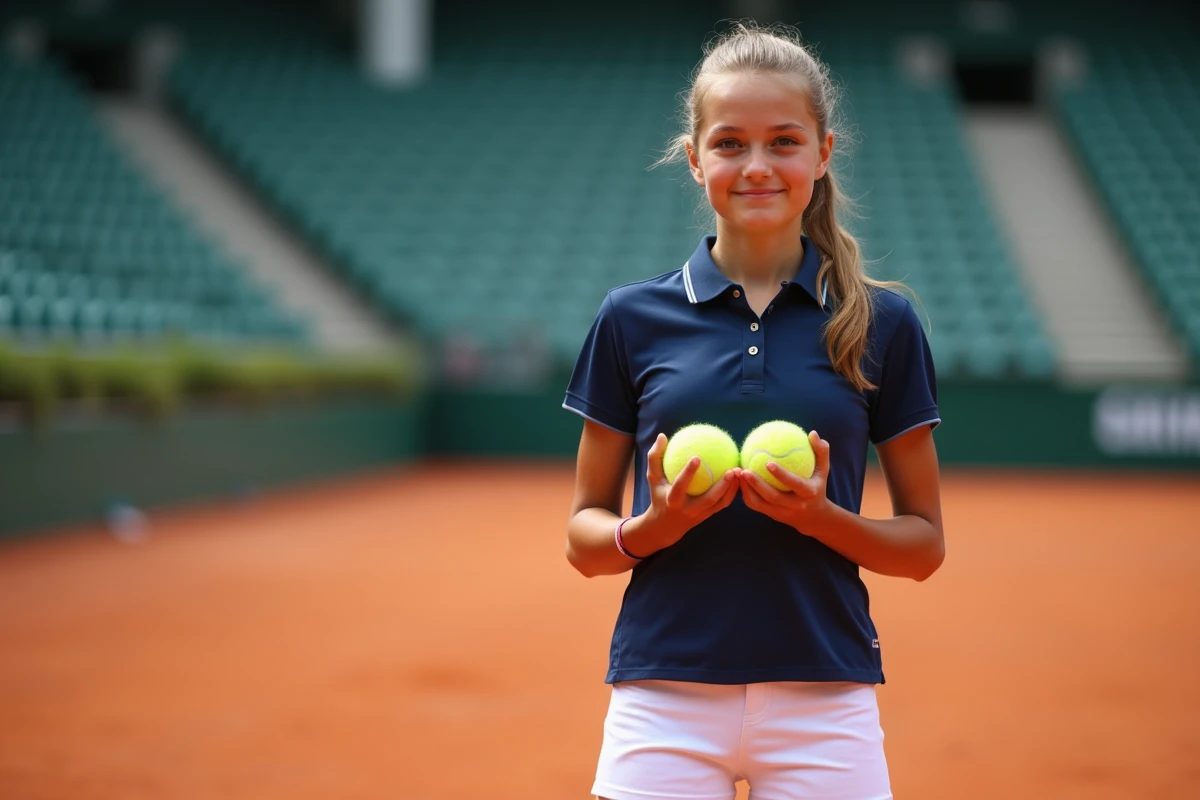
The recruitment process begins several months before the tournament. Candidates, generally aged twelve to sixteen, must be licensed at an affiliated tennis club. The selection goes through several physical and technical stages.
The criteria evaluated are not limited to the ability to run fast. The organizers test coordination, reactivity, concentration under pressure, and the ability to follow a precise protocol. Every action on the court is codified: the way to roll a ball on the ground, positioning relative to the players, the pace of delivery between points.
Training Lasting Several Weeks
The selected ball retrievers follow an intensive training program before the tournament begins. The sessions focus on positioning, gestures, and stress management. Six ball retrievers are present simultaneously on each court, with regular rotations to maintain concentration and limit fatigue.
This rigorous preparation partly explains why the FFT presents the role as a sports training experience rather than as a job. The young people acquire skills in discipline, teamwork, and physical endurance, in a very high-level competitive environment.
Physical Conditions on the Court: The Real Burden on Retrievers
The ball retrievers operate during matches that can last several hours, under sometimes challenging weather conditions. The episodes of extreme heat recorded in recent years in Paris have reignited concerns about the physical burden placed on these young people.
Sports doctors and physiotherapists involved in high-level tennis have raised several points:
- Prolonged sequences in direct sunlight, sometimes without the possibility of finding shade for long minutes
- The sustained pace of lateral movements and short sprints, which repeatedly strain the joints
- The absence of a public protocol for specific medical monitoring of the retrievers during the tournament, unlike professional players
The FFT has implemented hydration measures and more frequent rotations during hot days. Field feedback varies on this point: some former retrievers describe attentive organization, while others mention very long days with few real breaks.
Roland-Garros Compared to Other Grand Slam Tournaments: Different Models
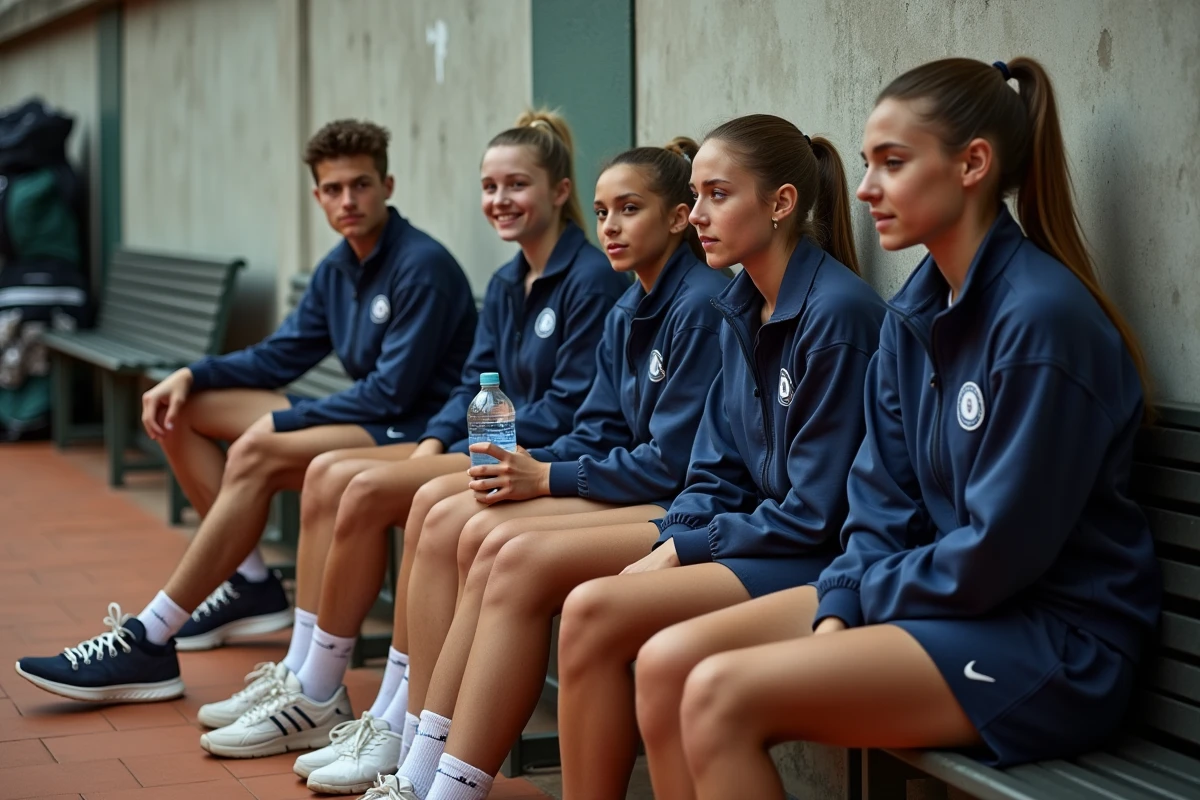
The comparison with the other three major tournaments highlights divergent approaches. Wimbledon and the US Open officially pay their ball kids, who are treated as part-time workers (“casual workers” or “part-time employees” according to local terminology).
The Australian Open operates with a hybrid model, between volunteering and financial compensation. Roland-Garros remains the Grand Slam tournament where the volunteer status is most strongly asserted, with a reimbursement that does not legally resemble a salary.
A Debate That Goes Beyond Sports
In recent years, legal experts specializing in labor law in sports have questioned the boundary between structured volunteering and concealed work in the French context. This issue is not unique to Roland-Garros: it also concerns volunteers at many sporting events in France.
Under French law, reclassification as an employment contract is possible as soon as a relationship of subordination is established, even in the absence of formal remuneration. The retrievers receive precise instructions, adhere to imposed schedules, and are subject to organizational authority. These elements fuel a legal debate that has yet to result in a court decision regarding the retrievers at Roland-Garros.
What Ball Retrievers Really Gain from the Tournament
Beyond the financial question, the role of a ball retriever at Roland-Garros remains highly sought after. Each year, the number of applications far exceeds the number of available spots. The appeal lies in several concrete factors:
- Direct proximity to the best players in the world, on the main courts of the tournament
- Complete sports equipment provided by the tournament sponsors, retained after the event
- A valuable line on a resume or school application, seen as a mark of discipline and reliability
- Access to the behind-the-scenes of a major international sporting event
For many young tennis enthusiasts, the experience is worth more than financial compensation. This observation does not close the question of remuneration, but it explains why the current model endures despite criticism.
The next evolution could come from harmonization among the major tournaments or increased legal pressure in France. For now, Roland-Garros maintains its structured volunteer model, a choice that relies as much on the tournament’s tradition as on an economic calculation whose contours the organizers do not publicly detail.