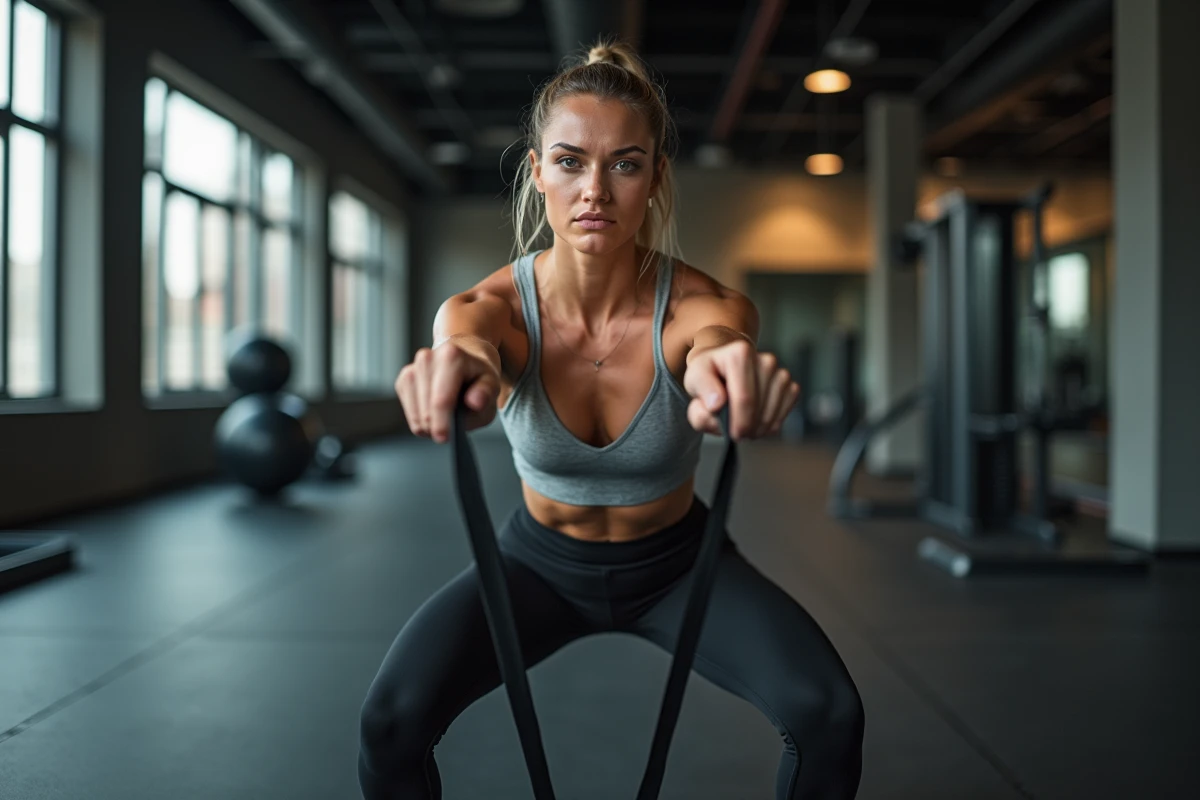
A fitness service refers to any structured program (group classes, individual coaching, online programs, or connected applications) aimed at improving physical condition through organized training. This concept goes far beyond the traditional gym membership: it now encompasses hybrid formats that combine in-club presence, video conferencing, and on-demand platforms.
Hybrid offers and connected ecosystem: what’s changing in fitness
The 2024 barometer from the Union Sport & Cycle highlights a clear trend: demand is skyrocketing for offers that combine gym access, applications, and remote coaching. An increasing share of members no longer settles for just one club. The typical journey now includes an in-person class, a guided session via an app, and remote follow-up with a coach.
This model changes the game for practitioners who struggle with consistency. Missing a gym slot no longer means abandoning a week of training. A filmed strength training session or a cardio circuit accessible from one’s living room takes over.
To find formats that align with this approach, fitness services on Y a du Sport allow for comparisons of various disciplines and facilities nearby, from yoga to HIIT to guided weight training.

Adapted physical activity: the regulatory framework to know
Since the implementation of the law of March 2, 2022, and its application decrees in 2023-2024, “health sport” has a precise framework. Several ARS and local authorities have established quality standards for structures offering adapted physical activity (APA). In practice, this means that classes aimed at individuals with chronic conditions (diabetes, obesity, cardiovascular diseases, cancer) must be supervised by specific graduates, particularly in STAPS APA or physiotherapists.
The National Observatory of Physical Activity and Sedentary Behavior (ONAPS) reports a notable increase in the practice of physical activity prescribed or recommended by doctors. The “sport on prescription” system drives demand for fitness services designed for vulnerable populations, far from the stereotype of gyms reserved for seasoned athletes.
How to verify that a structure meets these requirements
- Ask for the qualifications of the instructors: a STAPS degree with an APA mention or a state diploma in physiotherapy is required for programs related to a chronic condition.
- Check if the structure is listed in the ARS directory of the region, which attests to a level of compliance with quality standards.
- Ensure that an initial assessment is offered before any session, including a health questionnaire and, if necessary, a discussion with the treating physician.
A structure that does not offer a preliminary assessment likely does not comply with the APA framework. This point distinguishes a true adapted program from a simple “all levels” class that has been rebranded.
Corporate fitness: a lever for quality of life at work
Corporate subscriptions and solutions like Wellpass or Gymlib are experiencing a marked increase according to the European Health & Fitness Market Report 2024 (EuropeActive and Deloitte). Companies are increasingly using fitness services as a lever for quality of life at work (QVT), integrating yoga, cardio, or strength training sessions directly into their HR policies.
The mechanism is simple: the employer finances all or part of a multi-gym subscription. Employees freely choose their physical activity and structure. This format works because it removes two common barriers: cost and lack of choice.

What corporate programs concretely bring
A group strength training class during lunch break or a stretching session at the end of the day does not transform a body in a few weeks. Their main effect is on consistency. Exercising two to three sessions a week reduces sedentary behavior much more than an intense workout on the weekend.
Short formats (thirty to forty-five minutes) are the most suitable for the professional setting. They allow for a combination of moderate cardio work and strength training without encroaching on work time.
Building a sustainable fitness routine without expensive equipment
One of the most common barriers remains the belief that effective training requires costly equipment. In reality, bodyweight strength training meets the majority of needs for a non-competitive practitioner. Squats, push-ups, lunges, planks: these exercises engage major muscle groups without machines.
The gradual addition of resistance (bands, light dumbbells, weighted bags) comes after several weeks of regular practice, when the body no longer progresses with body weight alone. Jumping directly to heavy weights without mastering basic movements exposes one to joint or muscle injuries.
- Start with three weekly sessions alternating light cardio (brisk walking, cycling) and bodyweight strength training.
- Increase difficulty every three to four weeks by adding repetitions or slowing down execution, not by adding more weight.
- Incorporate a mobility or yoga session once a week to maintain joint range of motion, often neglected in performance-oriented programs.
Slow progression protects joints and promotes long-term adherence. An overly ambitious program at the start is the leading cause of dropout within the first three months.
Ultimately, the choice of a suitable fitness service relies on three concrete criteria: the qualifications of the instructors, the flexibility of the format (in-person, remote, hybrid), and the ability to adjust the program to one’s actual physical condition. Recent regulatory frameworks and the rise of connected offers make this adaptation more accessible than a few years ago, even for audiences who considered themselves too far removed from sports.