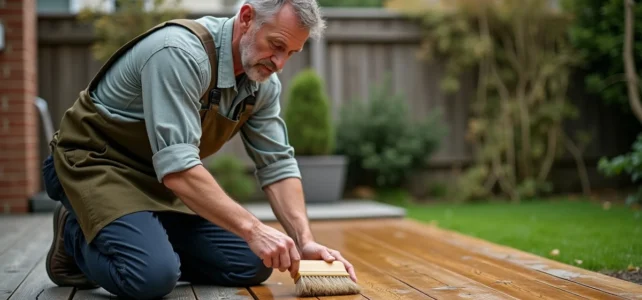
The saturator penetrates the wood without forming a film. The stain leaves a microporous film on the surface. All technical decisions stem from this difference in mechanism, and yet most comparisons stop at aesthetics or ease of application. We go further: compatibility with preservation treatments, behavior regarding regulated VOCs, and arbitration according to the type of substrate.
Compatibility with autoclaved and thermally modified woods
A saturator applied to class 4 autoclaved wood does not behave at all like on raw softwood. The copper salts injected during treatment modify the porosity of the heartwood and can push the oils of the saturator towards the surface, creating a non-absorbed greasy film. We regularly observe this phenomenon on green autoclaved pine decking boards less than six months old.
The recommendations from FCBA and CSTB published from 2023 emphasize this point: a recent autoclaved wood requires an extended drying time before saturation. On thermally modified wood (ash, poplar, or thermally modified pine), it is the opposite: the wood cell, emptied of its extractives by heating, absorbs the saturator quickly but unevenly. A preliminary edge test is essential to adjust the number of coats.
The film-forming stain has a clear advantage on these modified substrates: its mechanical adhesion depends less on residual porosity. On a glued laminated timber or CLT facade, the stain remains the default choice when adhesion takes precedence over natural appearance. To learn everything about the difference between stain and saturator, one must first know the preservation treatment of the wood in question.
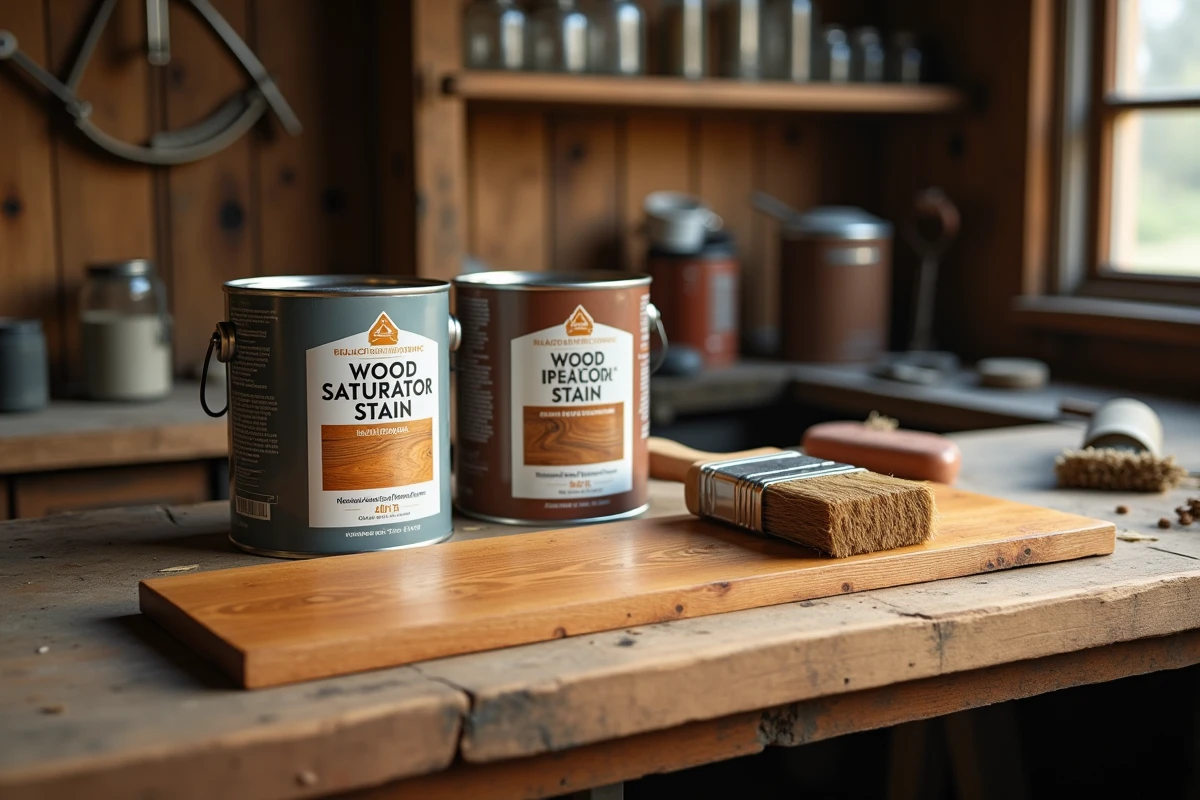
Stain or saturator in relation to VOC requirements and environmental labels
The revision of the European directive 2004/42/EC has accelerated the shift towards water-based formulations. In France, products classified A+ for indoor air emissions now dominate professional catalogs, both in stains and saturators.
The difference in formulation remains significant. A bio-sourced saturator based on linseed or sunflower oil naturally displays very low VOC levels because the main solvent is water or a vegetable oil. A water-based stain, on the other hand, contains acrylic or alkyd binders in emulsion that require coalescents, sometimes classified as VOC even at low concentrations.
- HQE or Sustainable Building labeled sites: check the product’s FDES and prefer a bio-sourced saturator if the natural aspect is accepted.
- Solvent-based stains (white spirit): still used on renovation sites for old joinery due to their penetrating power, but their use is restricted each year.
- Mineral oil-based saturators: effective in humid environments, but their environmental profile excludes them from most recent public specifications.
We recommend systematically requesting the technical data sheet and the FDES before making a choice. An A+ labeled product says nothing about its durability on the intended substrate.
Outdoor wooden terrace: technical choice criteria
On a horizontal terrace exposed to UV and water stagnation, the saturator wins on a simple criterion: the absence of a film eliminates any risk of blistering and peeling. A stain that blisters on a stepped decking board creates moisture retention zones under the film, accelerating decay.
The saturator, on the other hand, requires more frequent maintenance. On a south-facing terrace, reapplication is necessary once or twice a year depending on the region and the species. A softwood (pine, spruce) consumes more product than a dense exotic wood like ipe or cumaru.
Case of dense exotic woods
On ipe or teak, the stain adheres poorly: the density of the wood prevents the formation of a stable film. The saturator, designed to penetrate, adapts better, provided the surface is degreased beforehand. Fine sanding (minimum 120 grit) followed by cleaning with oxalic acid opens the pores and significantly improves absorption.
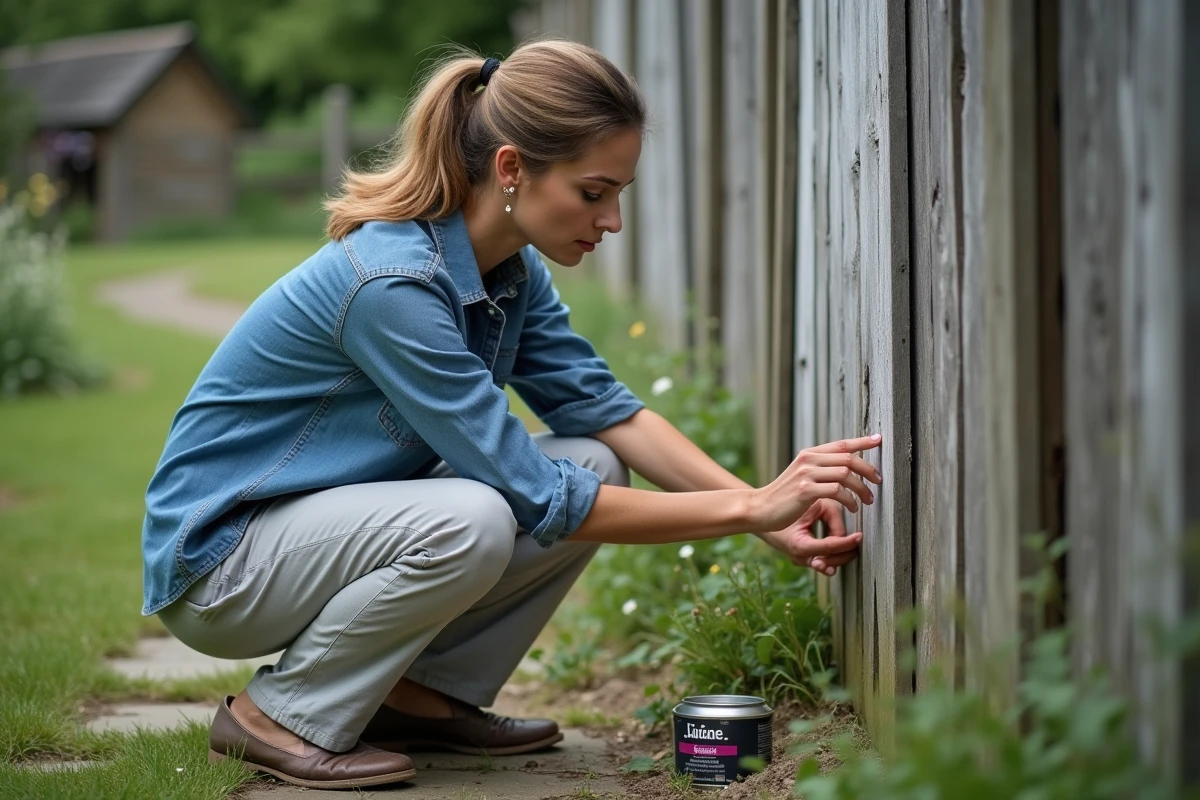
Siding and vertical joinery: when the stain takes the advantage
On a vertical plane, the issue changes. Water runs off, UVs strike at an oblique angle, and foot traffic does not exist. The microporous stain protects longer than a saturator on these surfaces because its film slows UV erosion without blocking the hygrometric exchanges of the wood.
On a siding made of Douglas or larch, a tinted stain offers significantly greater durability than a colorless saturator. The pigment load filters ultraviolet rays, the primary factor in graying. A tinted saturator exists, but its pigment retention remains inferior to that of a film-forming stain.
- Wooden shutters and windows: systematic staining, especially in west-facing exposure (driving rain).
- Siding sheltered under eaves: the saturator may suffice if regular maintenance is accepted.
- Exterior beams of exposed framework: thick stain (high protection type) to limit shrinkage cracks.
Maintenance and renovation on old stain
Renovating a flaking stain requires stripping or sanding before reapplication. This is the main technical disadvantage of stain in the long term. A saturator can be reapplied directly after a simple cleaning, without sanding or stripping, which reduces maintenance costs over the lifespan of the substrate.
The choice between saturator and stain is primarily an arbitration between maintenance frequency and film durability. On a stepped terrace or dense exotic wood, the saturator prevails. On siding, joinery, or any exposed vertical surface, the film-forming stain remains the technical reference. The type of wood, its preservation treatment, and the level of exposure to UV and water determine the debate much more than the price per liter.