
Security scanners at airports analyze every bag and every passenger. However, their ability to detect cash remains poorly understood by most travelers. The question deserves to be asked from a technical angle: what do these machines actually see, and at what stage of the screening process do banknotes become visible?
X-rays, millimeter waves, and metal detectors: what each technology perceives
Three types of scanners coexist in airports. They do not detect the same things, and their relationship to cash differs radically.
| Technology | Main function | Detects banknotes? | Where it operates |
|---|---|---|---|
| X-ray scanner (luggage) | Analyze the contents of bags and suitcases | Yes, bundles appear as rectangular blocks of homogeneous density | Luggage screening conveyor |
| Millimeter wave portal (body) | Detect concealed objects under clothing | Yes, it signals any non-body mass | Passenger screening |
| Metal detector portal | Detect metallic objects | No, paper currency does not trigger any alerts | Passenger screening (older airports) |
One point stands out from this comparison: banknotes are visible on X-ray scans of luggage. A trained operator can easily distinguish a compact bundle among clothing or personal effects. The rectangular shape and uniform density of paper currency create a recognizable signature on the screen.
To delve deeper into how a scanner at the airport detects banknotes, it is important to understand that these devices assign different colors based on the density of the materials they pass through. Organic objects, metals, and plastics appear in distinct shades, making bundles of banknotes identifiable among other items in the bag.
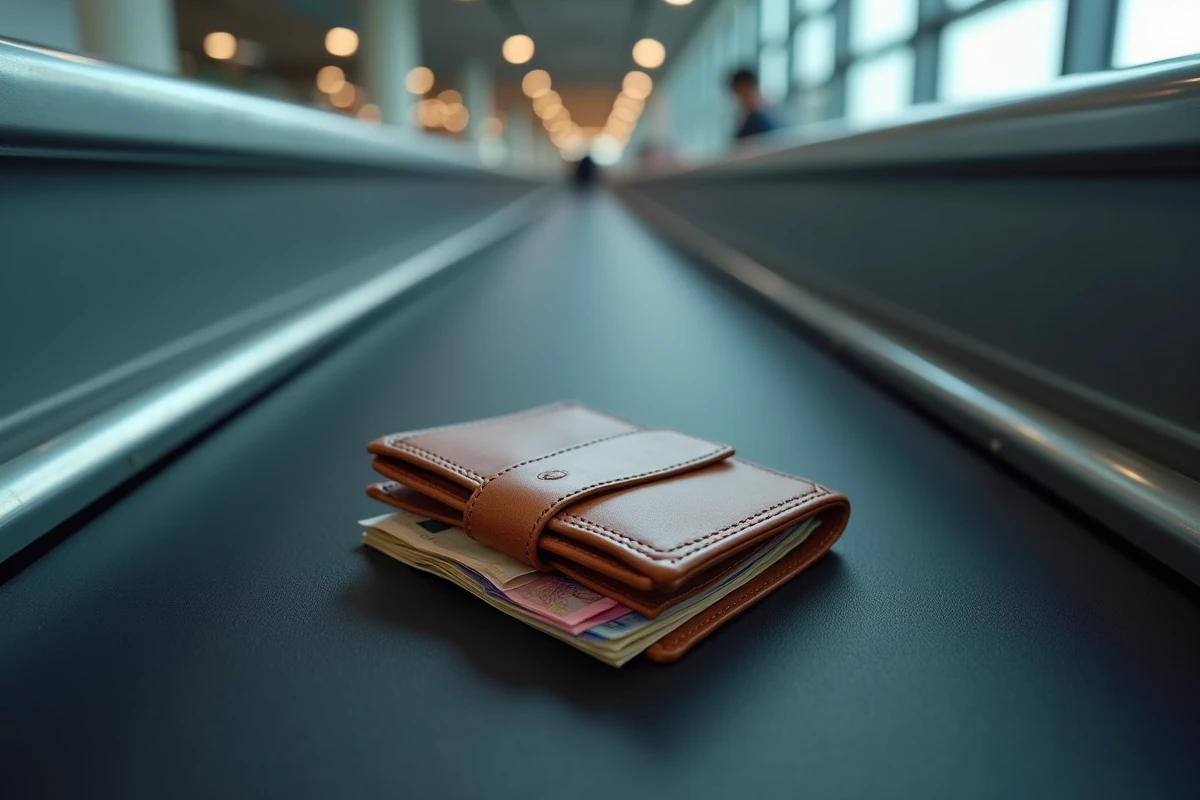
Detection of banknotes by scanners: security objective, not tax objective
X-ray scanners are not configured to automatically signal the presence of cash. Their primary mission remains the detection of weapons, explosives, and dangerous objects. No airport security algorithm specifically targets banknotes.
The operator monitoring the screen looks for suspicious shapes: blades, unusual electronic components, pressurized containers. A bundle of banknotes does not trigger an automatic alert in the scanner’s software.
However, an unusually dense amount of paper in a bag may catch the visual attention of the agent. If the shape or volume seems abnormal, they may request the bag to be opened for manual inspection. This inspection remains at the operator’s discretion and depends on their experience.
Body scanners and cash on oneself
Millimeter wave portals, used for passenger screening, operate differently. They map the surface of the body and signal any anomalies: an object in a pocket, something attached under clothing. Banknotes placed in a trouser pocket appear as an opaque area on the body image.
The portal does not distinguish a wallet filled with a pack of tissues. It simply signals an area to check. The agent then conducts a pat-down or asks the passenger to empty their pockets.
Older metal detector portals, still present in some airports, do not react at all to banknotes. Paper currency does not contain enough metal to trigger an alert, even in large quantities.
Customs declaration threshold: the real mechanism for detecting cash
The technological detection of banknotes by scanners is only part of the system. The most effective mechanism for spotting large amounts of cash relies on customs declaration requirements.
In Canada, the Canada Border Services Agency (CBSA) imposes a mandatory declaration starting from 10,000 CAD or the equivalent in foreign currency, whether entering or leaving the country. This rule applies to both cash and monetary instruments (traveler’s checks, money orders).
This declaration threshold principle is found in many countries. The consequences of failing to declare go far beyond a simple fine:
- The CBSA can seize the entire amount of undeclared funds, not just the excess amount above the threshold
- Seized funds may never be returned if deemed proceeds of crime or linked to terrorist financing
- The passenger may face criminal charges in addition to the seizure
The logic is the same everywhere: no legal limit on the amount transported, but an obligation for transparency. The scanner does not replace customs control. It complements it.
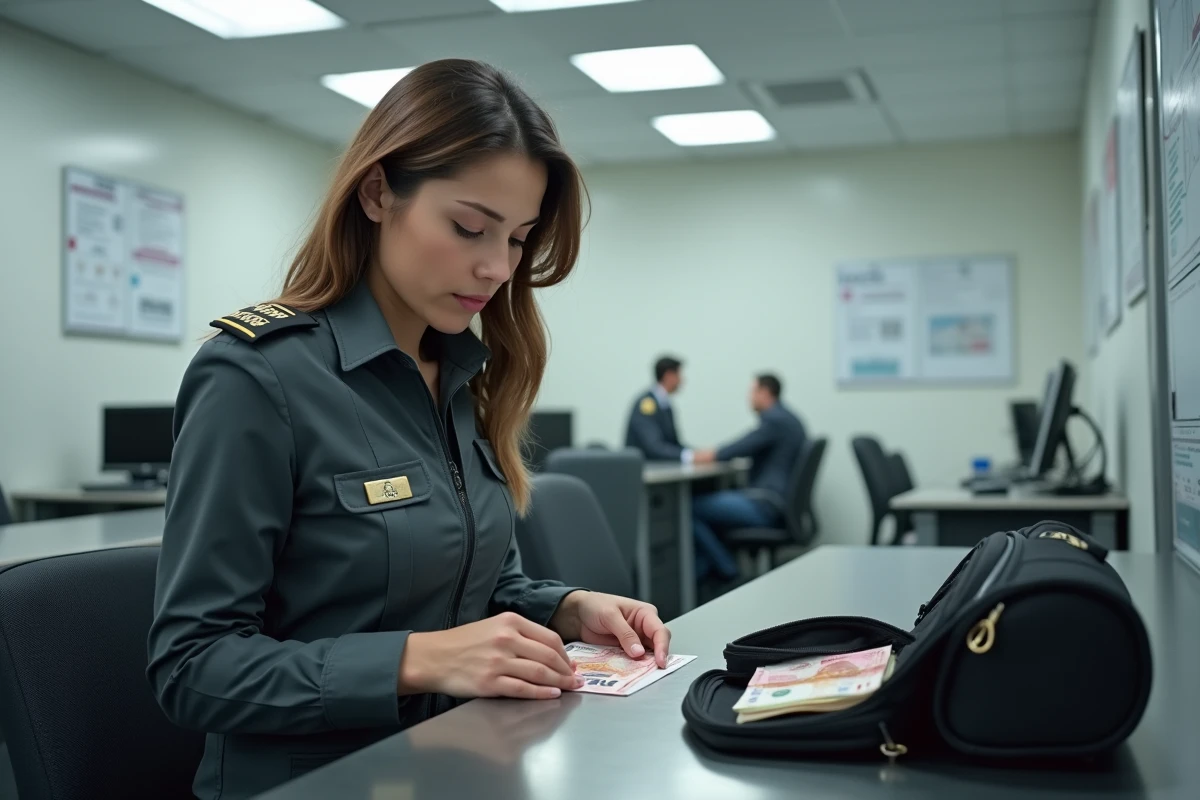
Cash in carry-on or checked luggage: where to place it practically
The placement of cash in luggage directly influences the level of exposure to checks. Carry-on luggage is systematically scanned by X-ray under the watch of an operator. Checked luggage is also scanned, but by automated systems primarily looking for explosives.
Placing cash in carry-on luggage exposes it more to visual inspection by the security agent. Keeping banknotes on oneself (in pockets, belts) makes them visible only to the body scanner, which signals the area without identifying the nature of the object.
- In carry-on luggage: bundles appear clearly on the X-ray screen, recognizable rectangular shape and homogeneous density
- On oneself: the millimeter wave portal signals an anomaly but does not distinguish banknotes from another flat object
- In checked luggage: the automated scan targets explosives, the likelihood of an alert related to cash is low, but the risk of theft or loss increases
In any case, the scanner detects banknotes without it constituting grounds for questioning. Transporting cash remains perfectly legal. The only obligation on the passenger concerns the declaration beyond the threshold set by the destination or departure country.
The next time you go through security with cash, keep in mind that technology sees everything, but the legal framework only concerns undeclared amounts. Compliance with the declaration obligation remains the only truly useful precaution.